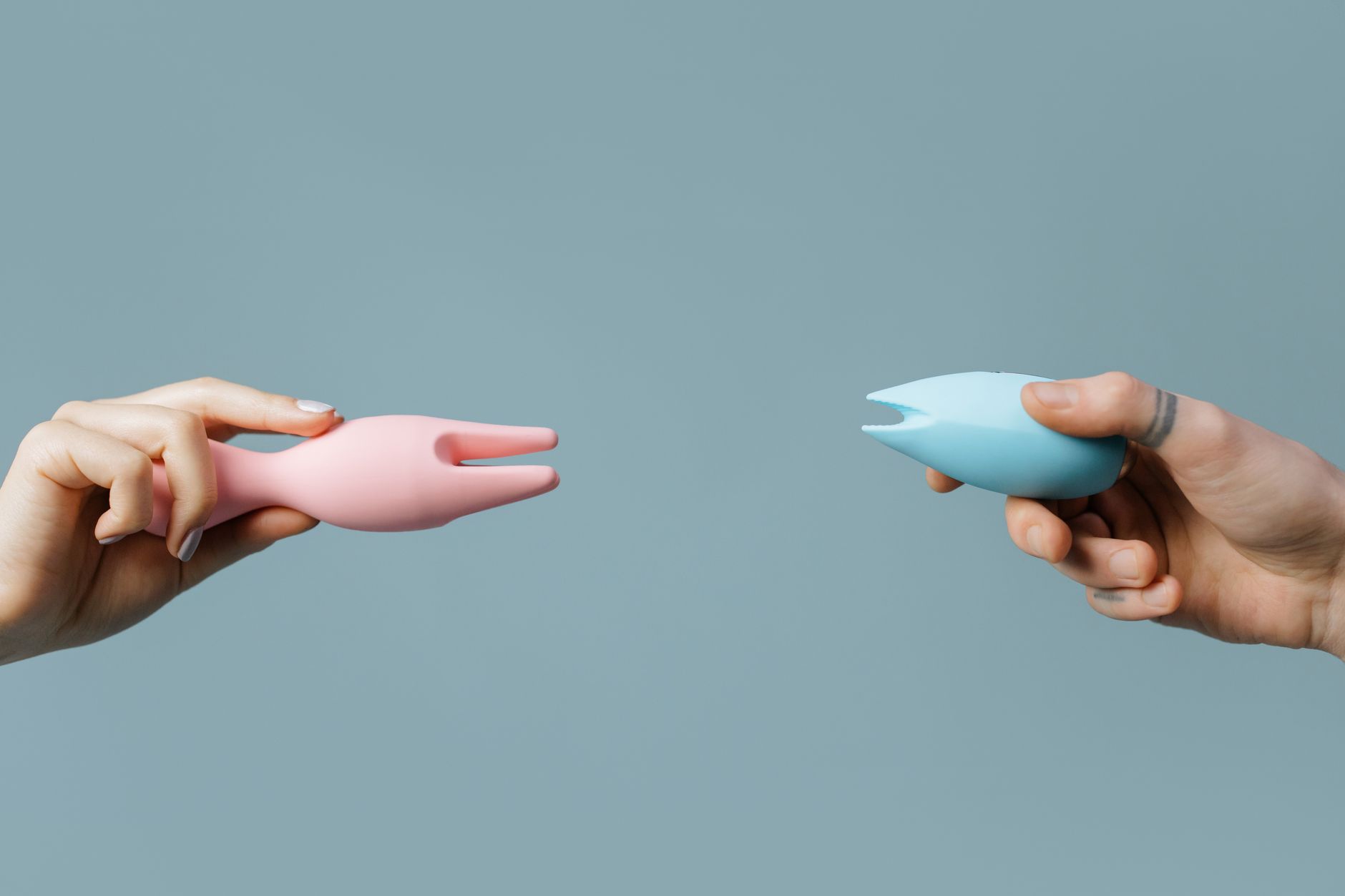
How Lemon Vibrators Help When Hormones Fluctuate During Your Cycle
Your sensitivity, arousal speed, and orgasm intensity shift across four weeks. Here's why lemon clitoral vibrators work so well when your body is changing, and how to use them strategically.
Your body doesn't stay the same for 28 days. Hormones don't just show up on one day and leave. They fluctuate constantly, which means your arousal, your sensitivity to touch, how quickly you can orgasm, and even what kind of stimulation feels best shifts four times a month. Most sex toys don't account for this. They buzz at the same intensity whether you're in follicular phase or luteal phase. Lemon vibrators work differently because suction technology adapts better to changing tissue sensitivity than traditional vibration does.
When you're bleeding, estrogen and progesterone are both low. This sounds like it would mean less arousal, and for some people it does. But here's the thing: lower hormone levels also mean less fluid retention in your clitoral tissue, which means it's slightly less swollen. For some people, that means sensation feels different, more direct. For others, the reduced swelling means touch feels less intense.
During menstruation, many people find they can orgasm faster when they do feel aroused, because the clitoris is less engorged. But getting aroused in the first place can feel harder.
This is where suction technology (like in the Lem) has a real advantage. Instead of relying on friction or vibration intensity to build sensation, suction creates negative pressure that gradually engages nerve endings. You don't need as much "spin-up" time. People often find they can go straight to medium intensity without the preliminary light touch that might feel frustratingly numb during this phase.
About five days after menstruation starts, estrogen begins climbing. This is the follicular phase. Estrogen is literally rebuilding the tissue in your vulva. Clitoral tissue becomes more engorged, more responsive to touch. Desire starts climbing too, not because you're suddenly hornier, but because the tissue itself is becoming more sensation-ready.
This is usually when people find that lighter touch feels good again. The Lem's lower patterns (1 through 3) become genuinely pleasurable instead of frustratingly soft. You might also notice that orgasms start feeling more intense and easier to reach, not because anything changed mentally, but because the physical substrate of sensation is improving.
During follicular phase, many of my clients actually prefer to explore multiple orgasms instead of chasing intensity. The suction works beautifully for this because it's less fatiguing than traditional vibrators. You can build, release, then build again without the physical exhaustion of sustained high-frequency vibration.
Right before you ovulate, estrogen peaks. For most people, this is the most sensitive phase. Touch feels more vivid, arousal builds faster, and orgasms feel stronger. This isn't psychology. This is tissue literally at its most engorged, most responsive state.
Some people find that during ovulation, they actually prefer higher intensity stimulation because the tissue can handle it comfortably. Others find that even medium intensity feels almost too much because sensation is so heightened. Both are completely normal.
During this phase, lemon sexual toys give you options. You can start at pattern 1 and stay there if everything feels intense. Or you can jump to pattern 5 or 6 if you want more sensation and the tissue is ready for it. The gradual ramp of suction (rather than sudden vibration spike) means you can adjust without the jarring transition that sometimes happens with traditional vibrators.
After ovulation, progesterone rises while estrogen dips slightly. This is the longest phase, about 14 days. And it's when things get weird.
Progesterone does something estrogen doesn't: it increases baseline swelling in your whole body, including your vulva. Your clitoris becomes more engorged again, but differently. The tissue is thicker, a bit more numb on the surface even as deeper sensation might feel heightened. Many people describe this phase as feeling "duller" or "muffled" compared to ovulation.
At the same time, progesterone affects your brain. It can lower dopamine, which is connected to pleasure and reward. So you might have more difficulty reaching orgasm, or reach it less intensely, even if the tissue itself seems primed for it.
This is often when people get frustrated with traditional vibrators. You need higher intensity to feel anything, which fatigues the tissue, which makes everything feel worse. Lemon clitoral vibrators handle this better because suction at moderate intensity often penetrates that progesterone haze more effectively than surface-level vibration. You're not fighting the tissue. You're working with the deeper nerve structures that are still responsive even when surface sensitivity is low.
The only way to know your actual pattern is to pay attention over two or three cycles. Start noting a few things: which day of your cycle it is, what intensity you're reaching for with your lemon vibrator, how long warm-up takes, and what the orgasm feels like (if it happens). After two cycles, patterns usually emerge.
You might notice you're always at pattern 2-3 during menstruation, pattern 3-4 during follicular, pattern 4-5 during ovulation, and back to pattern 2-3 during luteal. Or you might have a completely different pattern. The point isn't to achieve some ideal. It's to know yourself well enough that you're not constantly surprised by what your body wants.
Traditional vibrators deliver the same frequency and intensity regardless of what's happening hormonally. They also create sensation through friction, which can feel harsh if tissue is swollen or unusually sensitive. Suction technology works with tissue instead of against it. It's why so many people find lemon adult toys more comfortable across different phases. The pressure builds gradually, engages nerves from multiple directions, and doesn't require tissue to be in a specific state to feel good.
During low-sensitivity phases, you get deeper engagement. During high-sensitivity phases, you have room to back off without the vibrator becoming useless. It's actually responsive to your cycle instead of indifferent to it.
It's not just about the vibrator itself. A few other things shift with your cycle and matter equally:
Lubrication: During menstrual and follicular phases, your body produces more natural lubrication. During ovulation, it peaks. During luteal, it drops again. If you're in a low-lubrication phase, adding water-based lube helps even more than increasing vibrator intensity. The suction works better on properly lubricated tissue anyway.
Warm-up time: Plan for 15-20 minutes during luteal phase, 10-15 during follicular and menstrual, and as little as 5-10 during ovulation. This isn't a shortcoming. It's just biology.
Type of touch: Early follicular often loves lighter touch. Ovulation tolerates (and sometimes craves) intensity. Luteal often wants sustained pressure over rapid movement. The Lem adapts to all of this because suction is pressure-based, not frequency-based.
If the variance is so extreme that pleasure feels impossible for half the month, that's worth mentioning to your doctor. Sometimes cycle-based fluctuations in desire and sensation are normal. Sometimes they point to underlying hormonal imbalance, thyroid issues, or something else worth investigating. Knowing your own pattern (which you can track using a lemon vibrator strategically over two months) actually gives your doctor useful information.
Similarly, if luteal phase feels so low that nothing works, that might be PMDD or a related condition. Again, knowing that the issue is phase-specific (because you've tested your Lem across different days) is clinically useful information.
Most people approach pleasure as though it's supposed to feel the same every day. When it doesn't, they assume something is broken. Actually, you're just experiencing normal hormonal fluctuation. Once you understand the rhythm, you stop fighting it. You use the Lem when it works best for you. You give yourself permission to want different things on different days. And you stop being surprised when your body asks for something different than it wanted last week.
Your cycle isn't an obstacle to pleasure. It's a map to it, if you know how to read it.
Can I use a lemon vibrator on every day of my cycle?
Yes, absolutely. The point isn't that some days are off-limits. It's that your experience might vary. The Lem works across all phases because its pattern range is broad. You might use pattern 2 on day 3 of your cycle and pattern 5 on day 13, but you can use it whenever you want to. Some people find pleasure every single day. Others prefer certain phases. Neither is wrong.
Does my cycle affect how fast I can orgasm with a lemon clitoral vibrator?
Definitely. Around ovulation, orgasm often comes faster. During luteal phase, it usually takes longer, if it happens at all that day. Menstrual and follicular fall somewhere in the middle. This is tied to how engorged your clitoral tissue is, how much progesterone is affecting your brain's reward system, and how much lubrication is present. If you notice a pattern where orgasm takes 25 minutes during luteal and 8 minutes during ovulation, that's completely normal and not a sign the vibrator is failing you.
Should I use different intensity settings depending on where I am in my cycle?
Most people find they naturally gravitate toward different patterns. If you're tracking your cycle and testing, you'll probably notice you reach for pattern 3 at certain times and pattern 5 at others. But there's no "should." Listen to what feels good on the day you're using it. Some days you want gentler, some days you want stronger, some days you want something in between. The Lem's range makes that flexibility possible.
Can hormonal birth control change how lemon vibrators feel?
Yes. Hormonal birth control flattens hormonal fluctuation, which is literally the point. If you're on hormonal birth control, you might not experience the same variance across your cycle because your hormones aren't changing as dramatically. The sensitivity shifts might be much smaller, which means the vibrator might feel consistently good at the same setting. That's actually useful information for people trying to figure out whether their own hormones are contributing to sensation changes.
What if my cycle is irregular or I don't menstruate?
If your cycle is irregular or you don't menstruate, this advice doesn't apply the same way. But some of the underlying physics still holds: any fluctuation in estrogen or progesterone will shift sensation. If you're experiencing that but without a regular cycle, tracking what feels good on specific days (without reference to cycle phase) is still useful. You're just building a personal sensitivity map rather than a hormonal one. The lemon vibrator adjusts to whatever your baseline is.
Is it normal for pleasure to feel completely different across different phases?
Yes. It's normal and actually common. The changes are usually less dramatic than they would be without hormonal birth control, which is why people on hormonal methods might not notice as much variance. But if you're tracking your natural cycle and feeling wide differences in arousal, orgasm speed, sensation intensity, or even what kind of touch feels good, that's your body doing exactly what it's supposed to do. The Lem's flexibility makes working with that variance easier than traditional vibrators do.
The best way to see how your cycle affects sensation is to use a lemon vibrator intentionally across different phases. Pay attention. Note what intensity feels right on day 5 versus day 15 versus day 22. After two or three cycles, the pattern becomes clear. And once you know it, you're not guessing anymore. You're working with your body instead of against it.
Ready to explore what works best for you? We're here to help at Hello Nancy. No judgment, just real information about how your body actually works.