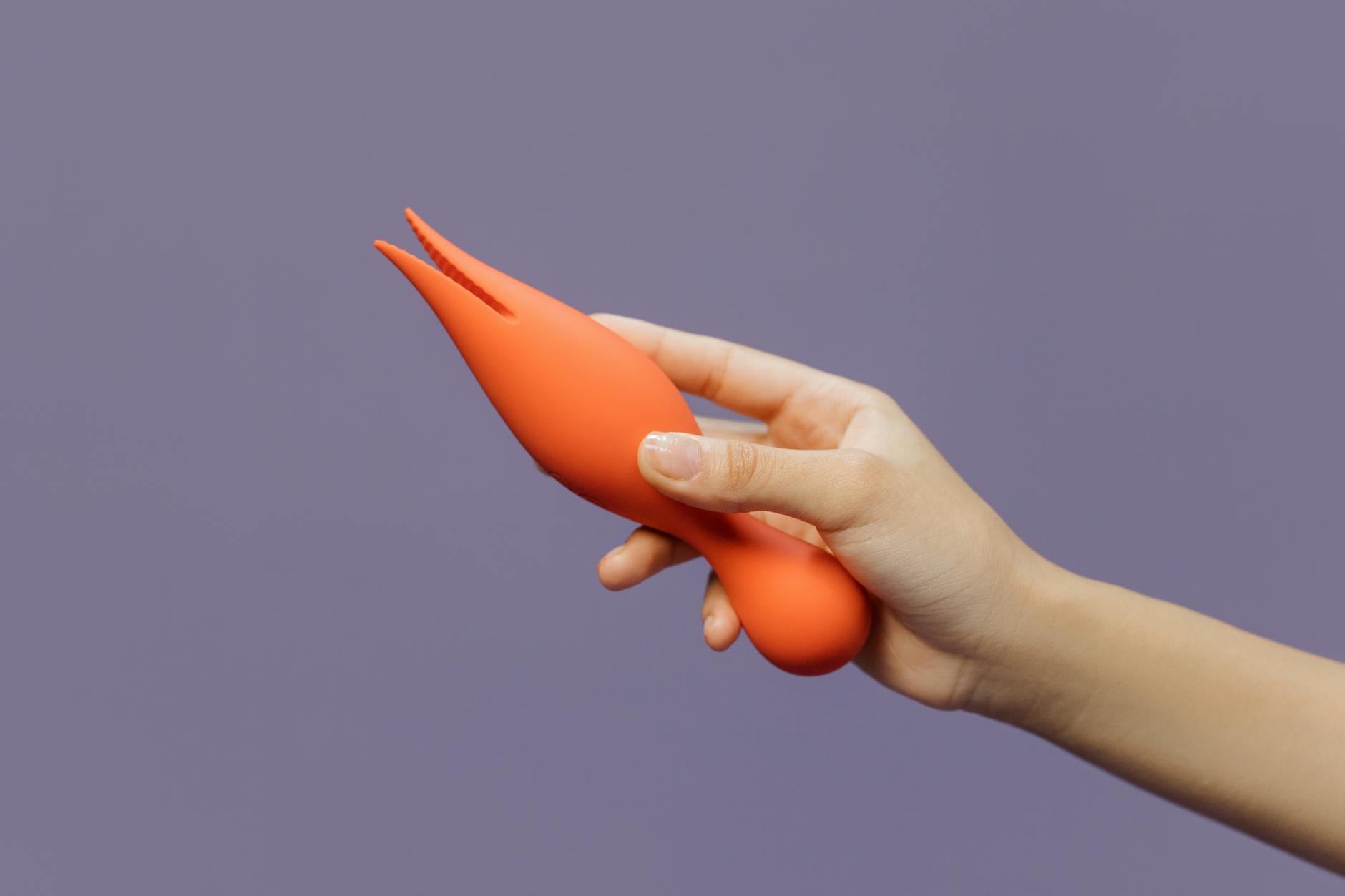
How Lemon Vibrators Help When Partners Don't Communicate About Pleasure
When words fail, a toy can start the conversation. Here's how introducing a lemon clitoral vibrator creates the opening couples need to talk honestly about what they actually want.
You and your partner have sex. It's fine. Maybe it's good. But neither of you has actually said what you want, what feels amazing, or what you'd change. This isn't a crisis, exactly. It's just... quiet. And that quiet builds up over months or years until talking about pleasure feels impossibly vulnerable.
I see this constantly in my practice. Long-term couples come in, and when I ask "Have you told your partner what you actually want?" there's almost always a pause. Not because the answer is no. But because it's complicated, because it feels risky, because the moment never seemed right.
Here's what I've learned: sometimes the problem isn't the desire or the connection. It's the permission structure. Introducing a lemon vibrator doesn't solve communication. But it gives couples permission to break the silence.
Think about how you were taught to talk about sex. For most people, the answer is: you weren't. Sex happened or it didn't. It was good or awkward. But the specific mechanics of "I want you to touch me like this" or "I need longer warm-up time" or "I want to orgasm before penetration"? Those conversations didn't exist in most households.
Now you're an adult, and suddenly you're supposed to casually tell someone else exactly what your body needs. Except it doesn't feel casual. It feels like criticism. It feels like admitting something's wrong. It feels like you're being too demanding.
Add a long-term relationship into that, and the stakes feel even higher. You've already established a rhythm with your partner. Changing it means acknowledging you've both been leaving something unsaid. For years, maybe.
Here's what's brilliant about introducing a lemon clitoral vibrator into a partnership: it's external. It's not about your partner's technique or your body's responsiveness. It's a third thing. A thing you both get to be curious about.
When one partner brings up pleasure needs directly, it can feel accusatory. "I need you to touch me differently." Even when it's not meant that way, it lands that way sometimes. But introducing a toy? That's a statement that says: "I want us to explore this together." It's collaborative by design.
The physical experience matters too. A lemon vibrator stimulates in a way that partners' hands usually don't. When your partner sees or feels the difference it makes for you, something shifts. They stop thinking "Does my partner need this because I'm not enough?" and start thinking "Oh, that's why they made that sound. That's what they needed."
In therapy, we call this creating a corrective experience. Your body's response to the vibrator becomes the evidence that pleasure is possible, and your partner gets to witness it. That evidence is powerful.
Timing matters. Don't bring it up during sex or right after. Definitely don't ambush your partner with it already in hand. The best moment is usually a low-stakes conversation outside the bedroom, maybe over coffee or a drink.
Here's a framework that works: start with curiosity about them, not about the toy. "I've been thinking about how we could both feel more satisfied. I've heard a lot about lemon vibrators, and I'm wondering if you'd be open to exploring that together?" Notice: you're not saying your partner isn't enough. You're saying you want to expand what's possible.
If your partner hesitates, don't push. Instead, ask what's making them uncomfortable. Often it's one of three things: they think it means you're not attracted to them, they worry it means something's wrong with their technique, or they've never thought about toys and it feels unfamiliar. Those are all answerable.
"I'm more attracted to you now than ever. I want more of you, not less. This is about deepening what we already have." That's honest, and it opens the door.
The first time using a lemon vibrator with a partner can feel awkward. That's normal. You're both learning something new about what works. But that awkwardness is actually productive. It forces you to stay present, to pay attention, to communicate in real time.
Which is where the real conversation starts.
Your partner might ask "Does this feel good?" or "Should I do this while using it?" or "What intensity do you prefer?" These are intimate questions, but they're easier to ask when you're both focused on the toy rather than on each other's faces. There's a little less shame. A little more room to be honest.
And once you've answered those questions, you've cracked open the door. It becomes easier to say other things. "I like it when you go slower." "I want more time for this." "I want to try something I saw." The toy wasn't the barrier. The permission was.
Over time, lemon vibrators and other tools become part of your shared language. Partners who start with a toy often find they're more comfortable asking for other things too. Not because the toy is magic, but because the toy gave you both practice being direct about desire.
Studies on couples who introduce toys consistently show the same pattern. Initial hesitation, sometimes awkwardness, and then a noticeable shift in satisfaction and communication. Partners report feeling more confident, less afraid to ask for what they want, and more connected to their partner's pleasure.
One key finding: couples who introduce toys together (rather than secretly) report significantly better communication afterward. It's not the toy doing the work. It's the conversation the toy created. That becomes a template for other conversations. If you can talk about lemon vibrators, you can talk about other vulnerable stuff too.
There's also something about shared curiosity that changes the dynamic. When you're both new to something, neither of you is the expert. That levels the playing field. It makes you a team again, exploring something together instead of performing for each other.
Sometimes a couple brings home a toy and it still doesn't work, because the communication problem runs deeper. If there's resentment, or infidelity, or fundamental mismatched desires, a toy won't fix that. It might even highlight the problem.
If you're in that territory, that's worth acknowledging. A toy is a great tool for couples who want to deepen what's already there. It's not a band-aid for a broken connection. And honestly, if you're in that situation, talking to someone like me is probably the real first step.
But for couples who are connected and just stuck in silence? A lemon vibrator can be exactly what you need to remember that you're on the same team.
After you've used a toy together a few times, the real work starts. And I mean that in a good way. It's the work of staying curious. "What did you like about that?" "What would you want to try next?" "How are you feeling about all this?"
These conversations don't have to be serious or scheduled. They can happen in bed, or the next morning, or whenever it feels natural. The point is just to keep the door open. To not let the toy become the end of the story, but the beginning.
One thing I always tell couples: pleasure is something you build together over time. It's not a destination. A lemon clitoral vibrator isn't the goal. It's just a tool. The real goal is a partnership where you both know you can ask for what you want and be heard.
So many couples are waiting for the perfect moment to talk about pleasure. Waiting until they've figured out the words, or until they feel braver, or until it seems less risky. That moment never comes. The risk never disappears. What changes is your willingness to take it anyway.
Introducing a lemon vibrator is a way of saying: I'm willing to be vulnerable here. Are you?
Most partners, when asked that way, say yes. Not because they suddenly understand everything about pleasure communication. But because they get that you're asking them to explore something together. And that's what partnership actually is.
Most people's "bad" reactions aren't about the toy. They're about feeling blindsided or judged. If you approach it as "I want us to explore pleasure together" instead of "You're not satisfying me," the reception is usually positive. That said, pay attention to your partner's general openness. Are they sex-positive? Do they talk about desire? Do they seem curious or closed off about their own pleasure? Those are indicators. And if your partner is consistently unwilling to talk about pleasure or explore together, that's worth looking at as a separate relationship issue.
Yes, but not automatically. The toy is a catalyst, not a cure. It creates a situation where talking about pleasure feels less abstract and more immediate. But you still have to do the talking. Use the experience as an opening. Ask questions. Listen. That's where the real conversation happens.
It's never too late. Long-term couples sometimes feel awkward introducing toys because they worry it signals something's been missing all along. Which, to be clear, something probably has been. But that's not a judgment. That's just human. We get locked into patterns. A toy is a way of saying "I want to shake things up." Most long-term partners, when approached correctly, are relieved to hear that.
Both. Using a lemon vibrator alone helps you understand your own pleasure better, which makes it easier to communicate with a partner. And using it together creates shared experience. They're not mutually exclusive. Some couples find they're more confident and communicative when both partners have explored solo first.
Frame it as expansion, not replacement. "I want to explore new sensations together" is different from "I'm not satisfied." Also make sure you're crediting your partner with some responsibility for the good parts. "I love our sex life and I want to make it even better" includes your partner in the outcome, not outside of it.
That's actually normal and worth exploring. Sometimes people worry that if they explore new kinds of stimulation, they'll discover they've been "doing it wrong" their whole lives. But pleasure isn't binary. You can like one thing and also like another. Your partner's pleasure doesn't threaten yours. It expands it.
Yes. You could send your partner an article about couples' toys. You could suggest it came up with a friend. You could leave a link in a text. Sometimes indirect approaches feel safer for starting a conversation that's hard. The important thing is that you start it. The method matters less than the intent.