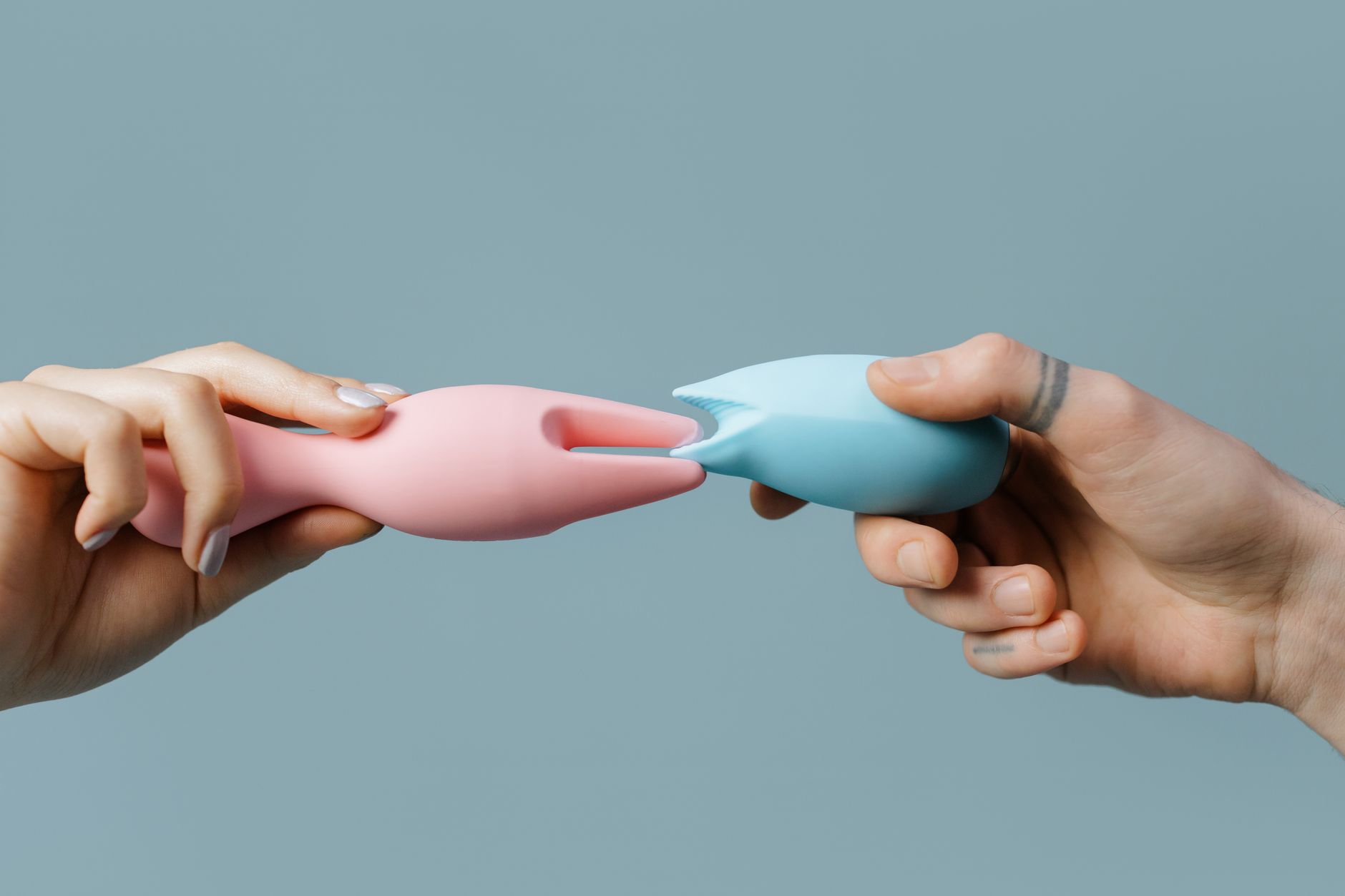
How Lemon Vibrators Help When You Can't Relax During Sex
Your brain is the problem, not your body. And lemon clitoral vibrators are weirdly good at getting your nervous system out of performance mode and back into pleasure.
You're in bed. Things are happening. And your brain is doing that thing where it leaves your body entirely and starts narrating what's happening from three feet away. "Is this taking too long? Am I doing this right? Do they think I'm broken? Why isn't anything happening?" And the more your mind spirals, the less your body cooperates.
Performance anxiety during sex is wildly common, and it's not a libido problem. It's a nervous system problem. Your body can't relax enough to feel anything because part of your brain is stuck in observer mode, rating the experience like a food critic at a restaurant.
When anxiety takes over, your nervous system shifts into sympathetic dominance (fight-or-flight mode). Your pelvic floor tightens. Blood vessels constrict. Arousal becomes nearly impossible because your body thinks it's under threat. It doesn't matter what's happening physically. If your brain is in surveillance mode, sensation gets blocked.
The irony is that trying to relax doesn't work. Telling yourself "just don't think about it" is like telling yourself not to think of a pink elephant. The effort of trying to relax becomes another thing to worry about.
This is why standard vibrators often backfire for anxious people. They require focus and intention. You have to aim them, adjust them, monitor whether they're working. That's three more things your anxious brain can obsess over.
Lemon vibrators, and specifically the suction-based design of devices like the Lem, work differently. They don't ask your brain to participate. They bypass it entirely.
Here's the mechanism: suction stimulation activates a different set of nerve pathways than traditional vibration. It creates a rhythm and intensity that's hard for your brain to analyze or judge in real time. You can't be simultaneously anxious about whether you're doing it right and experiencing intense suction stimulation. Your nervous system can only process so much input at once.
This is called cognitive displacement. When a sensation is strong enough and unusual enough, it crowds out the anxious thoughts. Your brain has to pay attention to what's actually happening instead of what might be happening.
People describe it as "I couldn't think about anything else even if I wanted to." That's not escapism. That's neurological relief.
One reason lemon clitoral vibrators work particularly well for performance anxiety is that they deliver more sensation than most people expect. The suction pattern is rhythmic but novel. Your nervous system hasn't habituated to it the way it might with traditional vibration.
When sensation is novel and intense, your prefrontal cortex (the part of your brain that worries) has to take a back seat. Your nervous system is too busy processing the input. This is the same reason ice baths create an immediate mental clarity. Your brain can't spiral when it's focused entirely on what's happening right now.
For anxious people, this is relief disguised as pleasure. You're not just having an orgasm. You're getting a break from the exhausting work of monitoring and judging your own experience.
If you're using a lemon clitoral vibrator by yourself, the performance pressure evaporates entirely. There's no one to perform for. This is often the fastest way to break the anxiety pattern and remember what pleasure actually feels like without a critic in the room.
But here's what's interesting: many people find that once they've experienced uninterrupted pleasure alone with a lemon vibrator, they can bring that same sense of presence back to partnered sex. Your nervous system learns that relaxation is possible. It's muscle memory for your brain.
If you're using a lemon sucker with a partner, the dynamic shifts. They're holding it. You're receiving. This reverses the performance dynamic. You're not executing. You're being attended to. That role reversal alone can quiet the anxious part of your brain.
Performance anxiety isn't a reflection on your capacity for pleasure. It's a sign your nervous system needs permission to stop working so hard.
Before introducing any toy, the real work is emotional. If you're stuck in a pattern of performance anxiety, talking about it matters more than the tool itself. Tell your partner what happens in your head. "My brain goes into observer mode and I stop feeling anything." That's concrete and actionable.
Then frame the lemon vibrator as a reset button, not a Band-Aid. "I want to use this because it helps my nervous system relax. It has nothing to do with you or what we're doing." That conversation removes the shame and replaces it with clarity.
If you're using the lemon vibrator alone first, there's nothing to communicate. Just permission to explore without judgment.
If you've been stuck in performance anxiety for a long time, your nervous system has gotten good at defending against vulnerability. You can't force relaxation. It has to be earned back gradually.
Start with the lemon vibrator on lower intensity settings (patterns 1 or 2 on most lemon clitoral vibrators). Give yourself 15-20 minutes with no pressure to orgasm. The goal is sensation, not outcome. Your nervous system needs to learn that pleasure can exist without performance.
Many people find that the first few times feel more like relief than intensity. That's normal. You're literally rewiring what relaxation feels like during sexual stimulation.
If performance anxiety is rooted in past sexual trauma or shame, a vibrator is a tool, not a cure. Working with a therapist who specializes in sexual trauma can help you understand what your nervous system learned. A lemon vibrator can support that work, but it doesn't replace it.
In that case, start even slower. Solo exploration with very low intensity. Build trust with your own body before involving a partner or even a device. The lemon vibrator becomes part of a larger pattern of giving yourself permission to feel good again.
Here's the thing nobody mentions: the moment your performance anxiety breaks is usually anticlimactic. You're not going to have a revelation. You're just going to notice that halfway through, you forgot to worry. Your brain was too busy feeling something.
That's the reset. That's what a lemon clitoral vibrator makes possible. Not because it's magic. Because it interrupts the anxious loop with enough sensation that your nervous system finally gets a break.
Once you know what that feels like, your body remembers. You can access it again, with a partner or alone, with a toy or without. The lemon vibrator is the bridge back to yourself.
Because "trying to relax" keeps your brain engaged in the monitoring process. It's like saying "don't think about the problem" while someone's pointing at it. The effort of relaxation becomes another thing to manage. Lemon vibrators work because they give your brain something else to process entirely, not something to manage.
It can support that work, yes, but a vibrator isn't therapy. If shame is the root of the anxiety, working with a therapist trained in sexual health is the foundation. A lemon clitoral vibrator can be part of re-learning pleasure, but it works best alongside emotional processing, not instead of it.
Generally, yes. Solo exploration removes the performance variable entirely. Your nervous system can learn what relaxation feels like without anyone else's presence to manage. Once you've experienced that, bringing a lemon vibrator into partnered sex feels less vulnerable because you already know it works for you.
That's okay. It means the anxiety is deeper than the tool can address. Consider whether a conversation with a therapist or sex educator might help. Sometimes performance anxiety is tied to deeper relationship dynamics or past experiences that need attention outside the bedroom first.
It varies widely. Some people notice a shift in the first solo session. Others need several weeks of regular use before their nervous system genuinely believes that relaxation is safe. There's no timeline. The goal is progress, not speed.
Absolutely. In fact, many anxious people find that letting their partner hold the device is a powerful way to practice receiving without performing. It signals to your nervous system: "I can just feel this. I don't have to produce anything." That role reversal can be deeply relaxing for people caught in performance mode.
Performance anxiety during sex feels like a personal failing. It's not. It's a nervous system doing its job too well, protecting you from vulnerability. The solution isn't to white-knuckle your way to relaxation. It's to give your brain something better to do.
Lemon vibrators do that. They're not the only tool that works. But they're remarkably good at interrupting the anxiety loop and reminding your body what pleasure feels like when your brain finally stops narrating it.
The rest is just permission. Permission to feel. Permission to stop monitoring. Permission to let your nervous system reset. Everything else follows.