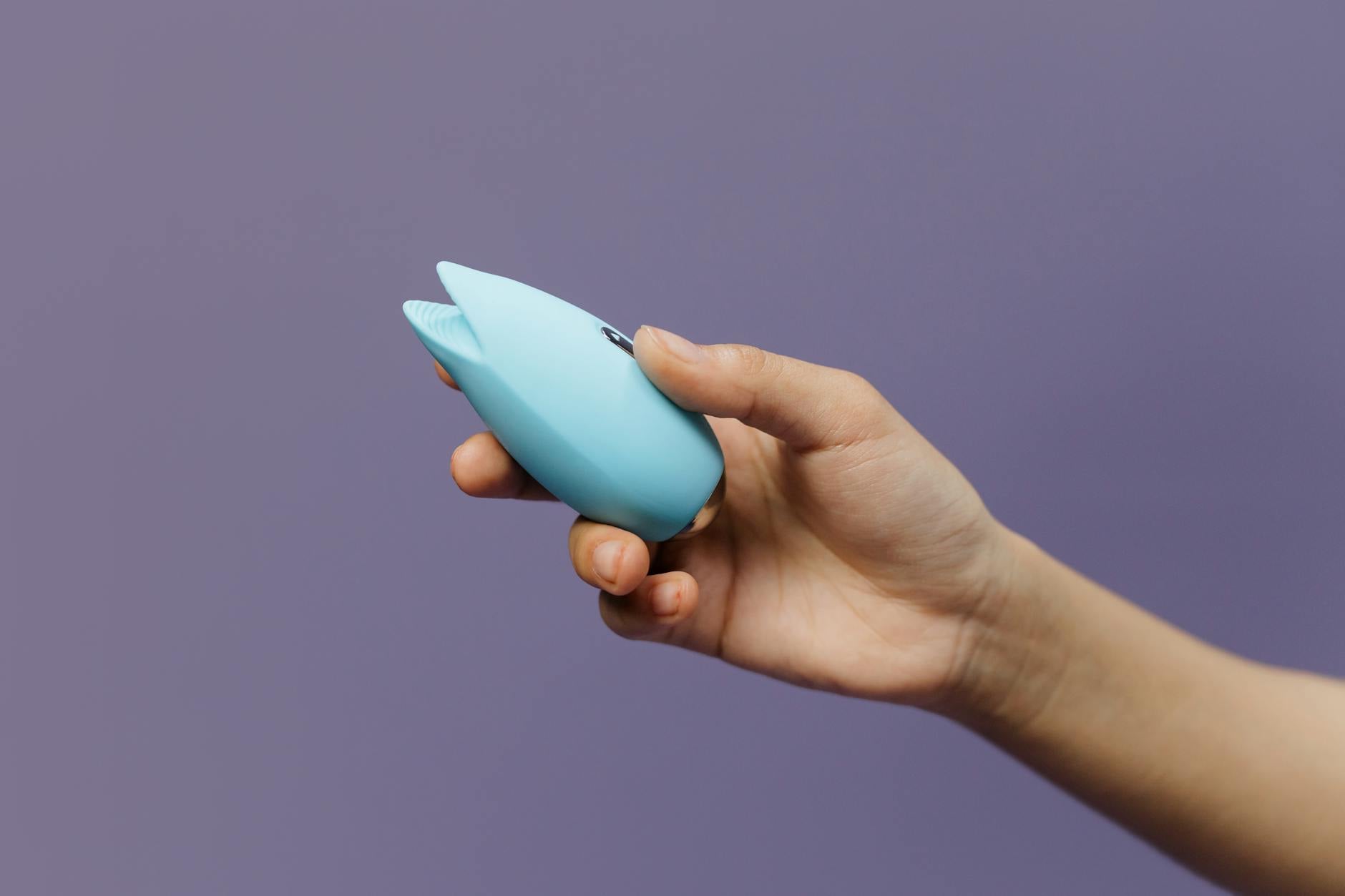
How Lemon Vibrators Help With Reduced Sensitivity After Traditional Vibrators
Years of direct vibration numb the tissue. Here's why suction works differently, how long sensitivity takes to return, and what makes lemon clitoral vibrators the reset button most people don't know they need.
Let's be direct: years of using the same traditional vibrator can genuinely reduce sensation. It's not that your body broke. It's not psychological. It's a straightforward physiological adaptation. Your nerve endings get habituated to repeated mechanical stimulation at the same frequency and intensity. The brain essentially stops registering the signal as "new" or "urgent" information.
This happens to a lot of people quietly. You might notice it as needing higher speeds, longer sessions, or feeling like you're "working harder" to get where you used to arrive easily. That friction-based vibration, the kind most traditional vibrators deliver, creates direct pressure over time. It works brilliantly at first. After years though, the tissue adapts.
The good news: sensitivity can return. It's not permanent. And the mechanism that restores it is completely different from what created the problem in the first place.
Most traditional vibrators work the same way: they vibrate rapidly back and forth in direct contact with tissue. That's efficient stimulation. Your body responds. But here's what happens over years of the same rhythm and intensity.
Your nervous system is built to detect novelty and change. When the same stimulus repeats in the same pattern, your brain's sensory filters gradually turn down the volume. It's called sensory adaptation. The exact same amount of vibration that felt electric at year one feels like background noise at year five. So you bump the speed up. Then that becomes the new baseline. And the cycle continues.
Additionally, repetitive direct pressure on sensitive tissue can cause temporary swelling and desensitization at the nerve level itself. The tissue becomes less responsive, not because you've damaged it, but because it's essentially been working overtime without variation.
This is where lemon vibrators and other suction-based clitoral vibrators interrupt the cycle. Instead of vibrating back and forth across the surface, suction creates a gentle pulling sensation that stimulates nerves in a fundamentally different way.
Think of it as recruiting different nerve fibers. Traditional vibrators tap into surface mechanoreceptors that you've trained to tune out. Suction engages deeper nerve pathways that haven't been overstimulated. It's not just a different sensation. It's a different neurological pathway lighting up.
The lemon clitoral vibrator, specifically, combines gentle suction with soft pulsing. Your body perceives this as novel. Because it's novel, your sensory filters don't automatically dial it down. The tissue also responds differently to suction because it's not experiencing repetitive mechanical pressure. It's experiencing a pulling, releasing pattern that feels both gentler and somehow deeper.
Many people report that after weeks of using lemon vibrators exclusively, traditional vibrators feel more pleasurable again too. You haven't forgotten how to use them. You've reset your nervous system's baseline.
Patience is the hardest part. Most people notice a shift within 2-3 weeks of consistent use, though "consistent" is key. You can't use a lemon vibrator twice and expect your nervous system to completely recalibrate. But within a month of regular use (2-4 times per week), many people report that sensation feels sharper, arousal builds faster, and orgasms feel more intense than they did before the switch.
Three months in, people often tell me they've noticed their sensitivity has improved so much that they can actually use their old vibrator occasionally and it feels good again. It's like giving your nervous system a break from the same song on repeat and then realizing how much you actually liked that song when you hear it fresh.
The timeline varies. If you've used the same traditional vibrator daily for ten years, the reset will take longer than someone who's done it for two years. But the direction is consistent: with a different stimulus (the lem vibrator's suction and pulse), your tissue and nervous system gradually remember how to respond with sensitivity.
Honestly, the first time feels weird. That's normal. The sensation is unfamiliar. Your clitoris might feel almost overstimulated because you're using nerve pathways that haven't been activated in years, if ever. Some people feel ticklish. Others feel like the pressure is too gentle compared to what they're used to.
This is actually a good sign. Your nervous system is saying "hey, something different is happening here." Stick with it for at least 3-5 sessions before deciding it's not for you. Start on the lowest setting. Take your time with warm-up. Let your body recognize the sensation as pleasant rather than alien.
The lemon clitoral vibrator is gentler than many suction toys, which can help during this transition period. It's not overpowering. It lets you explore the sensation without feeling jarred by a sudden shift in what stimulation feels like.
Sensation doesn't just return through stimulation alone. Your brain's involvement matters. People who actively pay attention to the new sensation, who slow down the session, and who approach it with curiosity rather than performance goals tend to recover sensitivity faster.
This is where the gap between mechanical stimulation and actual pleasure becomes obvious. A vibrator is a tool. Your mind is the primary instrument. If you're using a lemon vibrator while mentally checking a to-do list, you won't recover sensation as quickly as someone using it with full attention.
Try this: use the vibrator in a quiet space without other distractions. Focus on the specific qualities of the sensation. Where exactly do you feel it? Does it pulse or steady? What does the pulling sensation feel like compared to vibration? How does your arousal build? This kind of attention retrains your brain to register pleasure as novel and important again.
You don't need to throw away your old vibrator. Some people find a rhythm that works: primarily using the lemon vibrator to maintain sensitivity, but occasionally returning to a traditional vibrator for variety once sensation has improved.
The key is not going back to exclusive use of the traditional vibrator. If you do, you'll restart the adaptation cycle. But alternating, with lemon vibrators as your main tool, lets you enjoy variety without losing the sensitivity gains you've built.
Think of it like listening to different genres of music. You can enjoy both. You just don't want to listen to the same song at the same volume every single day and then wonder why it stops landing.
Beyond sensation, some people notice their bodies respond differently to suction. Orgasms sometimes feel more localized, more concentrated, rather than the broader wave response that traditional vibrators might create. Some people find they can have multiple orgasms more easily because the sensation doesn't feel as physically exhausting.
Your clitoris might also feel less tender during or after sessions, since suction doesn't involve the same mechanical friction. This means longer, more comfortable sessions and faster recovery time if you want to use a toy again the next day.
Tissue swelling from repetitive vibration also tends to reduce once you switch to suction. This creates a feedback loop of improvement. Less swelling means better nerve sensation. Better sensation means you're more engaged. More engagement means faster sensitivity recovery.
If you've given suction-based lemon vibrators a solid two to three months and sensation genuinely hasn't shifted, there might be something else going on. Nerve damage from trauma, certain medications, or hormonal shifts can reduce sensitivity in ways that toy choice alone won't fix.
A conversation with a healthcare provider or a sex therapist trained in sensate focus work can help you figure out whether the issue is neurological adaptation (which retraining fixes) or something else requiring different intervention.
But in most cases, yes, switching from traditional vibrators to a lemon clitoral vibrator does reset sensitivity. It's one of the most underrated uses of suction toys.
Your body doesn't lose the ability to feel pleasure. It just gets used to the signal you've been sending for years. The lemon vibrator offers a different signal. Your nervous system wakes up. Sensitivity returns. And in most cases, you end up with more options for pleasure than you had before.
If you're curious about making the switch, you can explore what a lemon clitoral vibrator feels like with minimal commitment. Your sensitivity is worth the experiment.