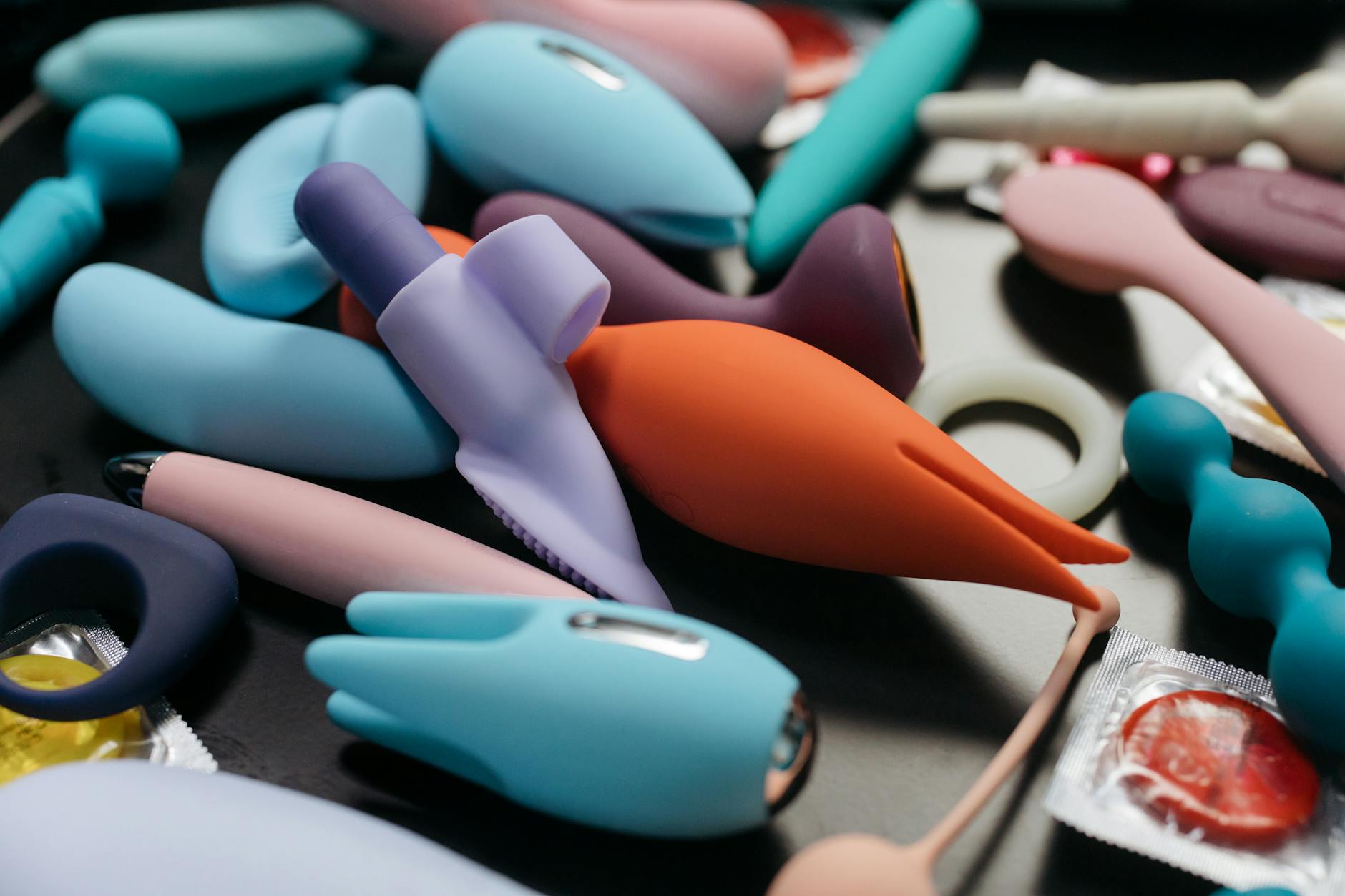
You want better orgasms. Stronger, fuller, more intense. So you turn up the vibration, push harder, chase it faster. And then everything goes numb, or starts to hurt, or the sensation just flatlines. Sound familiar.
This happens more often than you'd think, and it's not a sign your body is broken. It's a sign you're working against your own nervous system instead of with it.
Here's what actually builds stronger orgasms: sustained stimulation at the right pressure, rhythm consistency, and nervous system readiness. Not maximum vibration speed.
When you jump straight to high intensity, your nerve endings go into defense mode. They're flooded. Your brain gets a "too much" signal instead of a "more please" signal. The clitoris has thousands of nerve endings packed into a tiny space. Overwhelming them with raw power actually dampens your ability to feel fine details and build toward release.
Lemon vibrators work differently. Air-suction technology (sometimes called "licking" or "sucking" vibrators) applies broad, rhythmic pressure rather than piercing vibration. This mimics the kind of sensation that builds arousal progressively. It's closer to how most people naturally stimulate themselves, which is why the switch to lemon clitoral vibrators often feels like a revelation.
Think of your lemon vibrator like a volume dial, not an on-off switch. You're not choosing "vibrator or nothing." You're choosing where on the spectrum.
Pressure level 1 (intro): Barely there. This is barely-touching territory. Good for warming up, for exploring sensation when you're tense, or for that initial "hello, body" phase. Most people spend 3-5 minutes here. Your job isn't to rush to level 2. Your job is to notice what feels good.
Pressure level 2 (building): Steady contact. You can feel the suction rhythm clearly now. There's pressure without discomfort. This is where most people spend the real work time. 10-15 minutes here is typical and healthy. This is where arousal compounds and your body starts to show you what it wants.
Pressure level 3 (peak): Deliberate intensity. Firm suction, clear movement, you're riding the rhythm. This is the last 2-5 minutes, the approach to orgasm. Many people never need to go here. Some do, and that's fine. The key: you arrived here through levels 1 and 2, not by jumping.
With lemon vibrators, you can also play with angle. Slight movement, staying still, circling gently. These micro-adjustments give your nervous system variety without cranking the power dial.
When you first switch to a lemon vibrator, your body needs a recalibration period. This is not a flaw. This is learning.
Week 1-2: You're exploring. Use level 1 and 2 primarily. Get curious about what pressure feels like, where on the clitoris sensation is strongest, what rhythm your body gravitates toward. Some people orgasm immediately. Some take 20 minutes. Both are normal. The goal is familiarity, not performance.
Week 3-4: You're finding your groove. You probably have a favorite pressure level and a rhythm that works. Your orgasms might be building faster now. That's your nervous system adjusting, recognizing the pattern. Occasionally bump to level 3 in the final minute or two if it appeals to you. Don't hunt for it.
Week 5+: Your sensitivity is likely sharper now. You might notice that lower levels give you more detailed sensation than they did before. You might find you prefer longer sessions at level 2 rather than racing to 3. Or you might discover you can layer levels (intensity + angle changes) for richer sensation. This experimentation is the good part.
Some people hit a wall: "I can orgasm, but it doesn't feel like much." Or the opposite: "I get close and then I can't finish."
If sensation feels muted even after 4-5 sessions, there are three usual culprits:
1. You're tensing. Your pelvic floor or thighs are clenching hard, which actually suppresses sensation. Try this: at level 1, consciously relax your thighs and belly. Breathe steadily. This is harder than it sounds, especially if you usually rush. Slower, intentional sessions often feel more, not less.
2. You're not warmed up. Skip the vibrator for a session or two and spend 10 minutes with your hands first. Explore touch, temperature, build some baseline arousal. Then bring in the lemon vibrator. A body that's already aroused responds faster and with more sensitivity.
3. You're mentally somewhere else. This is the realest one. If you're worried about time, or noise, or how long it's taking, your brain is not in the game. Your nervous system knows. Consider a longer session when you have genuine privacy and 30 minutes minimum. Quality over speed always.
Here's a counterintuitive truth: the strongest orgasms often happen at mid-range intensity, not maximum. This is especially true if you're someone who's struggled with sensation, numbness, or taking a long time to finish.
Level 2 sustained for 15-20 minutes can build an orgasm that's far more satisfying than level 3 at 90 seconds. The reason is arousal buildup. Your body is learning, incrementally, what's coming. Your nervous system is primed. When release finally happens, it's richer.
This is also why lemon vibrators are so effective for people returning to pleasure after medication changes (like stopping SSRIs or hormonal birth control). The broad, rhythmic stimulation rewards patience in a way high-powered vibrators don't.
You've probably heard you need lubricant, but there's a nuance here. Natural lubrication responds to arousal and pressure. If you're using a lemon sucker at too high an intensity before you're aroused, there's no lubrication to buffer the sensation. It can feel raw or uncomfortable.
This creates a catch-22: you want to speed up to finish, but speed without lubrication makes everything worse. The fix is backwards from what you'd think. Go slower, lower pressure, longer warm-up. Your body will produce lubrication as arousal climbs. Then sensation improves naturally.
A light water-based lubricant is still a good idea. Not because you're broken, but because it allows the suction to feel smoother at every level, especially if you're sensitive or if you're building up from a period of lower sensation.
If you're using a lemon vibrator with a partner, the communication piece matters enormously. "I want stronger orgasms" can get mistranslated to "hurry up" or "do it harder." It's not the same thing.
You might say something like: "I'm enjoying longer warmups now. It actually builds to something better. Can we spend time at the lower intensity together, and let me control the speed?" Or: "I want to focus on sensation over rushing. If I take 20 minutes, that's not a problem we're solving for. That's the whole point."
Partners often assume faster pressure equals better outcome because that's what porn or cultural shorthand teaches. Reframing it as "I'm learning my body better and I want to go slower" usually lands better. And honestly, the side benefit is that you're likely to have better sex. Attention and patience are aphrodisiacs.
A quick reality check: not everyone's orgasms feel like a sparkly explosion. Some feel like a warm wave. Some feel localized and sharp. Some feel expansive and slow. All of these are real and valid.
When you're building stronger sensation with a lemon vibrator, you're usually chasing more intensity (duh), but also more consistency. Orgasms that aren't followed by numbness or physical soreness. Orgasms that feel clean and complete, where you actually get to rest afterward instead of feeling wound up or frustrated.
Some people find their orgasms change shape after a few weeks with a lemon vibrator. They last longer, or they're stronger at the peak, or they happen more easily. That's your nervous system adapting and your sensitivity improving. It's not magic. It's just what happens when you stop fighting your own body and start working with it.
There's no "right" time. Some people finish in 5 minutes, some in 30. Variables include your baseline sensitivity, whether you're aroused beforehand, stress levels, and medication history. What matters is that the orgasm, when it comes, feels good. If you're regularly taking 45+ minutes and feeling frustrated, that's worth examining. But 15-25 minutes is totally normal and healthy, especially when you're prioritizing sensation over speed.
Not in the way you're probably worried about. Your body doesn't "forget" how to respond to human touch. What actually happens is you become more in touch with your own preferences. Some people find that knowledge changes their partnered sex (they ask for things differently, or guide the rhythm more), and that's a feature, not a bug. You're becoming a more informed participant in your own pleasure.
That's information. It usually means either you're not aroused enough beforehand, you're tense, or you're dealing with temporary sensitivity (happens after certain medications or hormonal shifts). The fix is rarely "ignore it and push through." Try a session at just level 1 with no pressure to orgasm. Just explore sensation for its own sake. Sometimes permission to not finish is what lets you actually feel something.
Yes, actually. The broad, rhythmic suction often reawakens sensation in ways that traditional vibrators don't. But it takes patience. You might need 3-4 weeks of regular use to notice a shift. And you might need to support it with other things: managing stress, adjusting medications (with your doctor), or working through any psychological blocks. But as a tool for rebuilding sensitivity, lemon vibrators are genuinely effective.
Completely. Some people's nervous systems are wired to prefer sustained mid-range intensity over short bursts of high intensity. That's not a limitation. That's your body being honest about what actually works. Honor it. You'll have better, more satisfying experiences if you listen to that preference rather than fighting it.
Your nervous system shuts down temporarily. This is called post-orgasmic refractory sensations and it's normal. What you want to avoid is arriving at that numbness feeling frustrated or still chasing more. If you come to orgasm through 15-20 minutes of building arousal at moderate intensity, the numbness that follows is peaceful. You feel done. But if you've been bouncing between intensities or feeling rushed, the numbness feels like failure. The difference is in the approach.
Building better sensation is about working with your nervous system, not against it. Lemon vibrators are good at this because their design mimics natural stimulation. But the real work is yours: slowing down, paying attention, and trusting that pressure and patience actually work better than speed and force.
If you're returning to pleasure after a long break, this framework is especially useful. You're rebuilding sensitivity anyway. You might as well do it in a way that creates stronger outcomes.
The Lemon Wand lemon clitoral vibrators are built for this kind of gradual intensity play because they let you dial in the exact pressure you need without extreme power jumps. Start at level 1 or 2. Stay there for weeks if you need to. Your stronger orgasms will wait, and they'll be worth the patience.