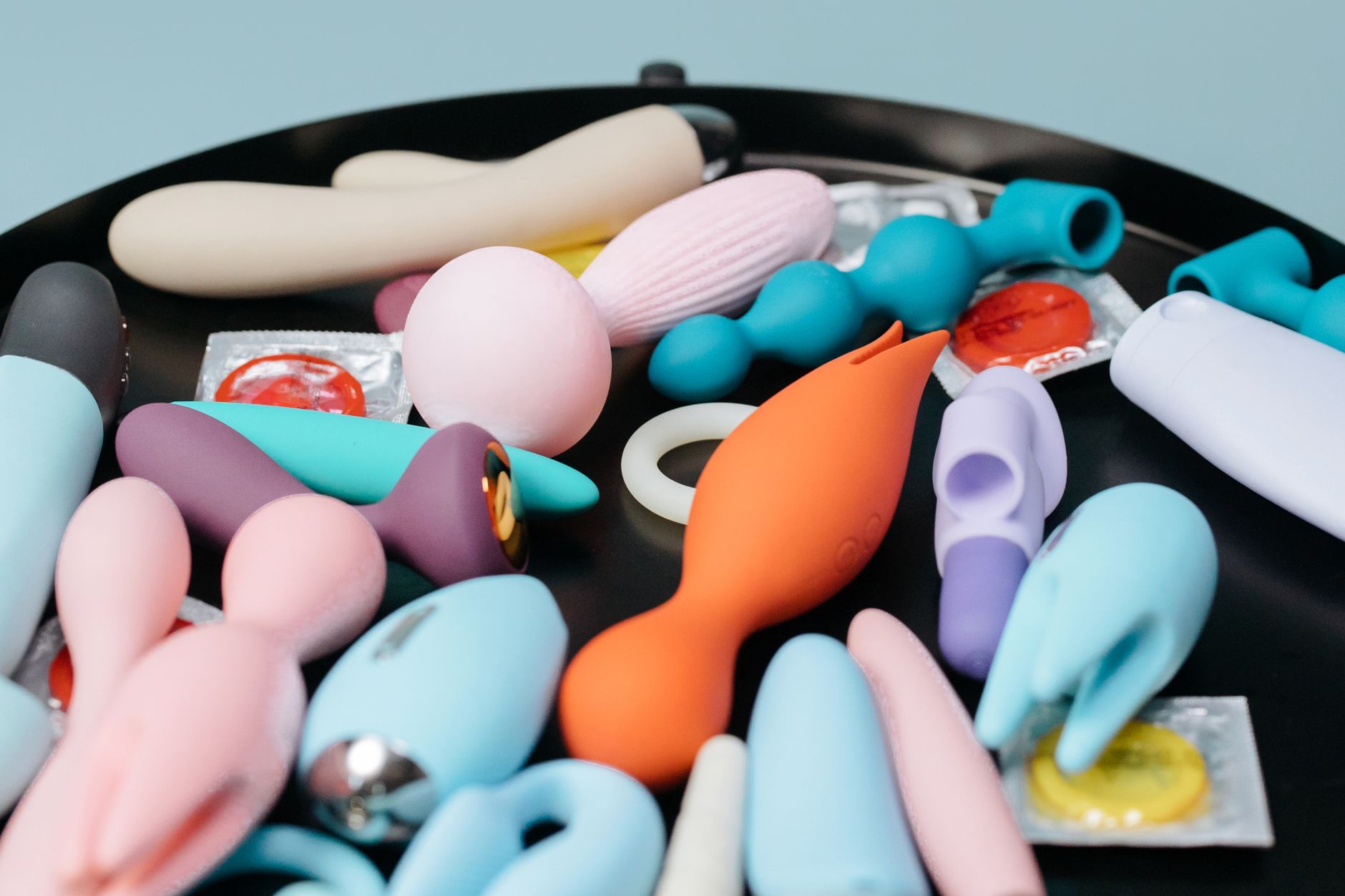
You've heard about lemon vibrators. Maybe you own one. And now you're wondering how the hell to bring it into bed with your partner without the conversation feeling like you're asking them to participate in something deeply weird.
Here's the thing: it doesn't have to feel weird. But it will if you treat it like a confession or an afterthought. The awkwardness isn't about the vibrator itself. It's about how the conversation happens.
When someone sees their partner with a suction toy like the Lem for the first time, the brain sometimes goes to one of two places: "Am I not enough?" or "Why didn't they tell me?"
Neither of those thoughts is about the toy. Both are about feeling left out or suddenly uncertain about what they thought they understood about your sex life. That's a relationship conversation wearing a sex toy disguise.
The fix is to separate the two completely. You're not asking your partner to approve your pleasure. You're asking them to participate in something that feels good. Those are wildly different requests, and one of them lands a lot better.
Don't ask permission. Don't make it a negotiation. Do this instead.
Pick a moment outside the bedroom. Not during sex. Not when you're tired or stressed. A normal conversation moment. Then lead with specificity, not apology. Here's the shape of it:
"I've been exploring some things about what feels good to me, and I found out that clitoral suction actually works better for my body than traditional vibration. I'd love to try it with you sometime. Curious what you think."
That's it. You've named the thing, explained why (body mechanics, not their failure), and opened a door instead of lobbing a bomb. Notice what's missing: "I'm sorry," "I know this is weird," "Do you mind," "Would you be okay."
If they seem hesitant, ask what's coming up for them. Listen. Don't defend the toy. If they're worried they're not enough, say: "This isn't about what you do or don't do. It's about my body's response to a different kind of sensation. Like how you might prefer one kind of touch over another. It has nothing to do with my feelings about you."
First time using a lemon clitoral vibrator with your partner present, go slow and make it collaborative.
Start by showing them how it works on your own. Let them see what suction feels like on their own hand first (yes, a lot of partners are curious). Demystify the thing. It's a toy, not a weird interloper.
Then, try three configurations:
Configuration 1: You take the lead. You hold it, you control the intensity, your partner does other things. Kiss them, have them touch your breasts, let them watch. Their job is presence and touch on other parts of your body. This takes pressure off them to "figure out" the toy and lets you focus on what feels good.
Configuration 2: They hold it. This is where intimacy deepens for a lot of couples because now there's active participation. They're not just watching, they're doing. Walk them through the intensity level you like. Give them feedback: "A bit slower," "Stay right there." Communication makes this feel connected, not clinical.
Configuration 3: Combined. They're inside you or using their hands while you (or they) use the lemon vibrator. This is advanced and worth waiting until you're both comfortable with the toy first. But when you get there, it often creates intense sensation and real intimacy because you're doing it as a team.
This is where a lot of couples get uncomfortable: they go silent.
Talk. Not philosophical talk. Practical feedback. "That feels amazing." "Slower." "Stay there." "I want to come like this." These aren't dirty talk requirements. They're just directional language that keeps the whole thing collaborative instead of weird and performative.
If something doesn't feel right, say so. "Can we try a different angle?" "This intensity is too much." Your partner isn't a mind reader, and the suction toy won't fix communication gaps.
Here's what happens after the awkward first time, almost universally: partners realize that having you come intensely and reliably is pretty hot. They also realize they can do other things they actually enjoy while you have that sensation, instead of trying to manually deliver something their hands can't match.
Many couples find that lemon vibrators actually improve their sex life because it takes the pressure off the partner to be solely responsible for your pleasure. You have a tool that works. They get to be present and connected without bearing the weight of "making you finish."
That's a relief for both people, even if it doesn't feel like it at first.
Keep it accessible. Don't hide the toy in a shoebox. Have it in a drawer you both know about. Familiarity kills awkwardness. If it's just sitting there, it stops being a big deal.
Use it for solo play too. If your partner only ever sees the lemon vibrator during partnered sex, it stays weird. Use it alone. Mention it casually: "I used the Lem this morning, felt amazing." Normalize it.
Check in after. Not a production, just genuine: "How was that for you?" "What did you think?" This prevents the post-sex spiral where someone is quietly uncomfortable and didn't speak up. Give them space to be honest.
Let them control intensity sometimes. This might sound backwards, but giving your partner the remote or the control builds ownership and playfulness. They get to experiment. You get to surrender a little. That shift can be genuinely hot.
If you've had the conversation and your partner is still resistant after trying it, there's usually a deeper conversation happening. It might be about control, about their own insecurity, about feeling left out of your pleasure, or about something entirely unrelated that's just surfacing now.
That's not a sex toy problem. That's a relationship dynamics problem, and it might be worth exploring with someone trained in couples work. How to introduce lemon vibrators to your partner without awkwardness covers the surface conversation. But if resistance persists, the real issue is probably deeper.
Using a clitoral vibrator with your partner often brings couples closer, not further apart, because it forces you to actually talk about what you want. Most couples don't. They have sex and assume they're on the same page when they're not.
Introducing a lemon vibrator is just the vehicle. The real win is learning to say: "Here's what my body needs. Here's what I want to try. I want you with me for this."
That conversation, repeated over years, is what actually keeps long-term relationships alive. The toy is just the starting point.
Because pleasure and love got tangled somewhere in their story. Untangle them. A vibrator does one thing: deliver a specific sensation. A partner does dozens of things: creates safety, intimacy, presence, connection. Those are different jobs. You can want both. Saying this directly and repeatedly sometimes helps.
Absolutely. In fact, lemon vibrators are often easier to introduce than traditional vibrators because they feel less "mechanical." The sensation is more subtle and targeted. Start with the conversation, then try configuration one (you holding it). You don't need a long sexual history with toys to begin.
Stop them. Say it right there: "A bit gentler" or "Different spot." This is the whole point of communication. If you can't pause and redirect in real time, you're not ready to hand them control yet. Go back to you holding it for a few weeks. There's no timeline here.
Different, not necessarily better. Solo, you control everything and there's zero performance pressure. With a partner, there's presence and connection. Some people prefer the intensity of solo. Others prefer the intimacy of partnered. Both are valid. The toy works either way.
Don't. Not yet. A toy will not fix disconnection. It will just add another thing to feel awkward about. Get the connection back first, even if that means talking to someone who specializes in couples sex. Then introduce the toy as a fun addition, not a solution.
Yes. The feeling is normal. It usually means your partner is jealous of the sensation, not actually of the object. Acknowledge the feeling: "I get it, I can do things it can't." Then show them. Use the toy together. Let them see that the intensity just makes you want them more, not less. For most people, watching their partner come intensely is genuinely hot, not threatening, once they get past the initial weirdness.
Introducing a lemon vibrator to partnered sex isn't about the toy. It's about being honest about what your body needs and asking your partner to be part of that journey. When you frame it that way, awkwardness usually dissolves. What remains is actual intimacy, which looks a lot like two people saying what they want and showing up for each other anyway.
That's worth a conversation. And honestly, it's usually worth whatever small discomfort comes first.