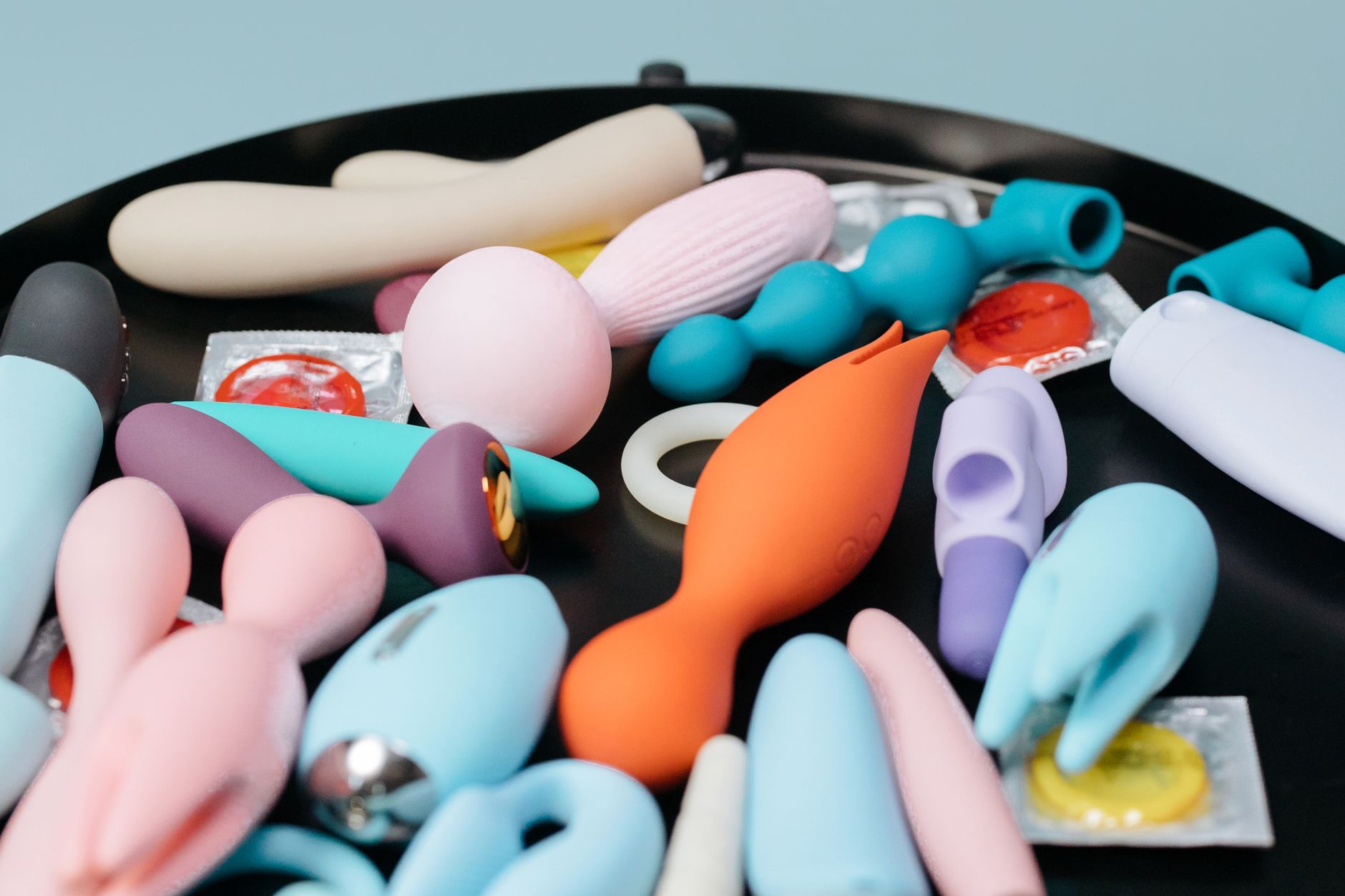
Why Lemon Vibrators Work Better for Partners Who Want to Explore Together
The difference between a toy that sits between you and one that invites both of you in. What makes lemon vibrators the easiest entry point for couples exploring pleasure together.
Most vibrators feel like something one person uses while the other watches. That dynamic changes everything about what the experience feels like emotionally. Lemon vibrators are different. They're designed in a way that naturally invites both partners into the experience, rather than making one person feel like a passive observer.
I work with couples who say they've tried vibrators before and it felt awkward or isolating. Then they try a lemon vibrator, and suddenly they're both engaged, both curious, both discovering something together. That's not accident. It's the design.
Most wand vibrators and bullet vibrators are designed for one person to control and experience alone. They're small, often handheld, and they concentrate stimulation in a way that works best when one partner is focused on their own sensation. The other partner becomes a bystander.
That's not bad design for solo use. It's actually ideal. But when you're trying to explore together, this setup creates a subtle emotional distance. One person is receiving pleasure. The other is managing the toy. The roles feel fixed, almost transactional.
Bullet vibrators especially can feel clinical when introduced to partnered sex. They're efficient. They work. But they don't feel intimate in the way most couples want.
The suction-based design of a lemon vibrator changes the entire dynamic. Here's why.
First, suction stimulation feels less mechanical and more like touch. When you use a lemon vibrator together, it doesn't feel like you're introducing a piece of technology into your intimacy. It feels like you're adding a new sensation to something you're already doing with your hands and bodies.
Second, the design means both partners can be involved actively. One partner can hold it, the other can guide placement and pace. Or you can hand it back and forth. This back-and-forth creates a conversation. It's collaborative in a way that a traditional vibrator rarely is.
Third, and this matters more than most couples expect, suction vibrators have a different learning curve. A lemon vibrator requires a little exploration to use well. You're learning together. You're experimenting with intensity, positioning, rhythm. That shared learning is intimate in a way that's hard to manufacture with other tools.
When couples come to me saying they want to "spice things up," what they usually mean is they want to feel closer and more connected. A vibrator is just a tool for that. But the tool you choose sends a message about what you're actually trying to do.
A bullet vibrator says: "I want you to feel good." That's kind, but it puts the receiving partner in a passive role.
A lemon vibrator says: "I want us to discover this together." That's a different conversation entirely.
With a lemon clitoral vibrator, both partners are engaged in figuring out what works. What intensity level feels best? Does gentle suction or stronger suction create a better sensation? Should we use it for a few minutes or longer? These conversations happen naturally because the tool invites questions.
This matters especially for partners who are nervous about introducing toys. A lot of the anxiety comes from feeling like you're being replaced or that you can't satisfy your partner without an external tool. A lemon vibrator actually counters that narrative because it requires both of you to participate.
One of the reasons lemon vibrators work well for couples exploring together is they're less intimidating to introduce. They look less clinical than a traditional vibrator. The design is intuitive. You don't need an instruction manual to understand what it does.
You can frame the conversation as curiosity rather than criticism. "I read that suction vibrators feel different. Want to try it together?" That's a very different opening than "I think you need a vibrator to come faster." The first invitation brings you together. The second creates a problem.
When you're introducing any new element to shared intimacy, the framing matters. A lemon vibrator actually makes the framing easier because the design itself is gentle and exploration-focused rather than high-intensity and performance-focused.
Start with communication about what you're both curious about. Are you exploring because you want a new sensation? Because someone's pleasure has shifted? Because you want to feel more connected? The reason you're trying it together shapes how you'll use it.
When you first use it together, keep expectations low. You're not looking for earth-shattering results. You're learning. One partner might guide placement while the other controls intensity. Or trade off. There's no right way to do this.
The benefit of suction design is that it's forgiving. If placement is slightly off, it still feels good. If you use it a little longer than expected, there's less risk of overstimulation compared to a traditional vibrator. That forgiveness takes pressure off performance.
Take time to talk during and after. What felt good? What was surprising? Did the rhythm work better one way or another? These conversations deepen connection more than the toy itself ever could.
I've noticed in my practice that couples who explore toys together tend to have better sexual communication overall. They're more likely to talk about what they want, what they're nervous about, what they're curious about. The toy is just the beginning of those conversations.
A lemon vibrator seems to lower the barrier for those conversations because it's a lower-stakes entry point. It doesn't feel extreme. It doesn't feel like you're introducing something complicated or intimidating. It feels like you're just trying something new together.
For partners who are in a rut, even a small shift in dynamic can be meaningful. Introducing a lemon vibrator together can be that shift. It says you're both willing to be vulnerable, curious, and collaborative about pleasure. That attitude transfers to the rest of the relationship.
The best sex toy for couples isn't the one with the most features. It's the one that invites both partners to participate, learn, and communicate.
If one partner is hesitant about toys, a lemon vibrator can actually address the underlying concern better than other tools. The most common resistance is the fear that a toy means you're not enough. Because a lemon vibrator is collaborative and requires both partners, it directly counters that narrative.
You're not introducing it because the receiving partner needs more stimulation. You're introducing it because you want to explore together. That's a fundamentally different frame, and it usually lands differently emotionally.
If there's still hesitation, slow down. Talk about what the resistance is really about. Is it feeling insecure? Uncomfortable with vulnerability? Worried about losing spontaneity? These conversations are the real work. The toy is just the occasion for the conversation.
Traditional vibrators work, but they can feel solitary. Couples' vibrators exist, but many feel gimmicky or too complicated. A simple lemon vibrator sits in the middle. It's designed for individual pleasure, but the suction mechanism and gentle design make it surprisingly good for exploration together.
You could also look at the lemon clitoral vibrator as an upgrade from what you might already have at home. If you're already using vibrators, switching to suction-based stimulation through a lemon vibrator often feels fresher and less mechanical. For couples, that's valuable because it feels like you're actually trying something genuinely different together.
One thing couples don't always talk about is what happens after you introduce a toy together. If the experience was good, you might feel more connected and want to keep exploring. If it felt awkward, you might feel embarrassed or worried it ruined the mood.
With a lemon vibrator, both outcomes are easier to navigate. If it went well, you can enjoy that sense of shared discovery. If it felt weird, it's easier to laugh about and move on because the experience didn't feel high-pressure or performative.
The key is not letting one awkward experience shut down the whole conversation. Pleasure and intimacy are learned. You're both beginners with this toy. That's the point.
Completely. Suction vibrators like the lemon vibrator are designed to be gentle, and there's no penetration involved. Just make sure you're using a water-based lubricant if you need extra glide, and start at lower intensity settings. You can always increase from there. Both partners control the experience, so safety is built into how you use it together.
Actually, the opposite. Because both partners are involved in the experience, it often feels more intimate than using a traditional vibrator alone. You're learning together, communicating, adjusting based on feedback. That creates closeness. The tool doesn't replace intimacy. It becomes part of it.
This is real, and it's worth addressing directly. Frame it as exploration, not criticism. Say something like, "I love what we do together. I'm curious to try something new with you." Make it clear that the toy is an addition, not a replacement. A lemon vibrator actually makes this easier because it requires active participation from both of you.
Timing and framing matter. Bring it up outside the bedroom when you're both relaxed. Lead with curiosity, not criticism. "I read about these and thought it might be fun to explore together" feels very different from "I think we need to try this." The first is an invitation. The second feels like a judgment.
That's actually the ideal time to try one. A lemon vibrator is intuitive and forgiving, so there's less pressure to know exactly what you want. You can discover what works through experimentation. That process of discovery together is often more valuable than finding the perfect sensation right away.
That's fine. Not every tool works for every body. The value isn't just in the sensation. It's in trying something together, communicating about it, and staying curious about each other's pleasure. If one partner loves it and the other finds it just okay, you've still learned something about each other.
It's not the technology. It's not even the suction mechanism specifically. It's that a lemon vibrator is designed in a way that makes collaboration easy and natural. You can't use one without engaging your partner, even a little. That engagement is what strengthens connection.
When you're exploring pleasure together, the tool is secondary to the conversation, the vulnerability, and the curiosity. A lemon vibrator just happens to invite all three of those things in a way that traditional vibrators often don't.
If you're curious about exploring together, you deserve a tool that makes that exploration feel less awkward and more connected. That's where lemon vibrators actually shine for couples.
Ready to start that conversation? Reach out anytime if you want to talk through what might work for your relationship.