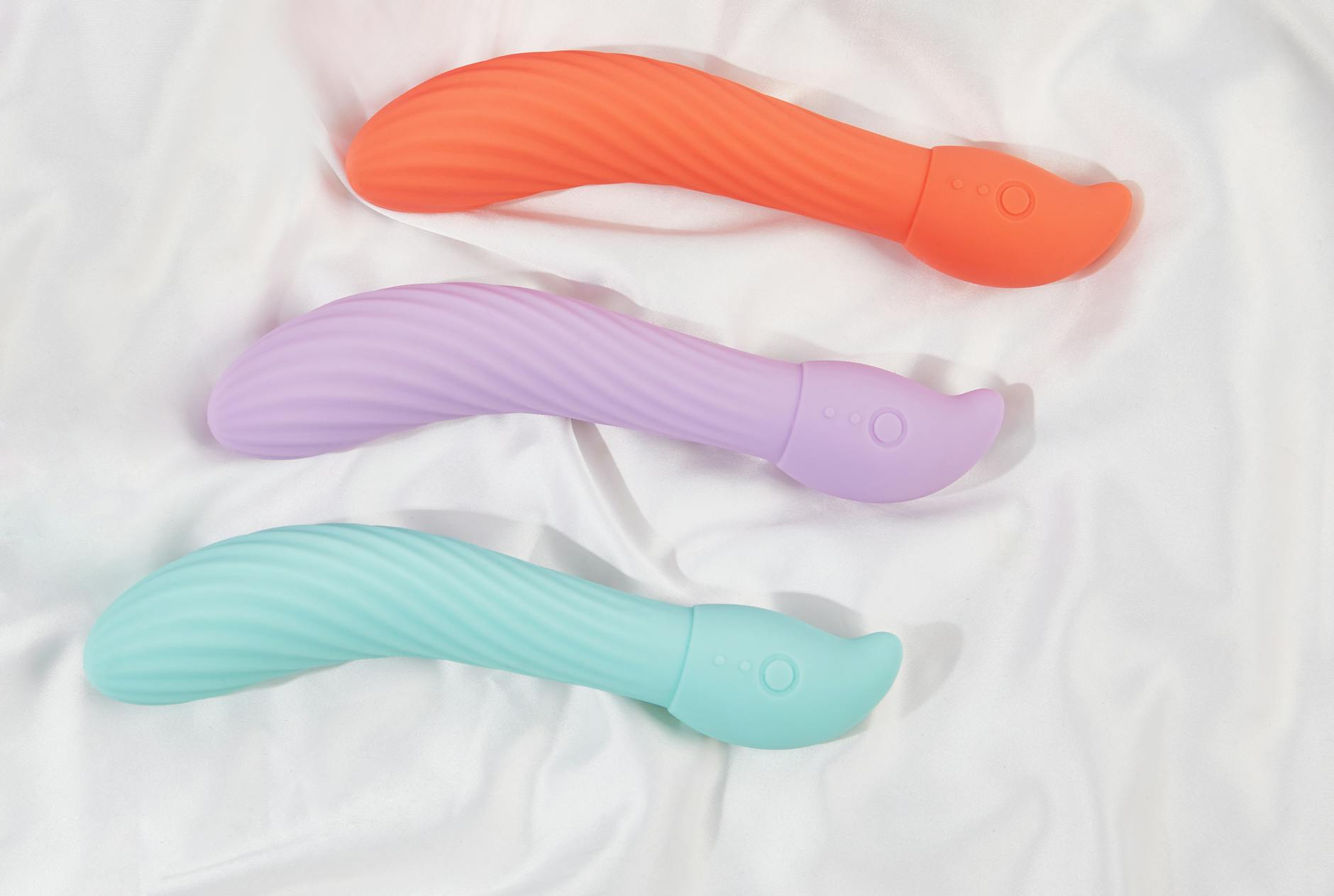
How Lemon Clitoral Vibrators Improve Sensation When Numbing From SSRI Antidepressants
SSRIs save your mental health but flatten pleasure. Here's why suction-based clitoral vibrators work where traditional toys fail when medication numbs arousal and orgasm.
Let's be real: SSRIs save lives. But they also kill something most people don't talk about at the pharmacy counter. Arousal. Orgasm. The ability to feel much of anything in the genital region at all.
You're not broken. Your brain chemistry shifted on purpose. And there's a workaround that doesn't involve ditching your medication or waiting years for your body to adjust.
Here's what happens. SSRIs (selective serotonin reuptake inhibitors) work by flooding your brain with more available serotonin. That's excellent for mood regulation. But serotonin doesn't just live in your brain. It's everywhere: your gut, your spine, and crucially, the neural networks that drive sexual response.
When you have more serotonin in circulation, your nervous system dampens down stimulation. It's like someone turned down the volume on everything. You're less anxious. You're also less aroused, less sensitive to touch, and more likely to have delayed or absent orgasms.
About 40 to 60 percent of people on SSRIs report sexual dysfunction. That's not a quirk. That's a predictable side effect of the medication doing what it's designed to do.
The cruel irony: SSRIs are often prescribed for anxiety and depression, both of which already tank libido. So you trade one problem for another, and the second problem feels personal when it's actually just pharmacology.
When sensation is muted, a standard buzzing vibrator can feel like holding a phone on vibrate mode against your skin. It's there. You know it's doing something. But the sensation doesn't translate into arousal.
Traditional vibrators rely on frequency and percussion. They work by stimulating a wide area of nerve endings through repeated oscillation. When your nervous system is already dampening incoming signals, a vibration that depends on you feeling the movement doesn't build anything. It just hums.
That's where lemon clitoral vibrators change everything. Suction-based clitoral vibrators work differently. Instead of asking your sensitized nerves to feel a vibration, they create a rhythmic pressure wave that travels through tissue layers. The sensation isn't about surface feeling. It's about creating a chain reaction deeper in the clitoral structure.
The clitoris has about 8,000 nerve endings concentrated in a relatively small area. But not all of those nerves respond the same way to stimulation.
When you use a lemon clitoral vibrator (or any suction toy), you're bypassing the surface nerves that SSRIs have dampened. Instead, you're creating pressure changes in the tissue around the clitoris. This activates deeper nerve clusters and the network of erectile tissue that extends into the body. It's a different signaling pathway.
Think of it like this: if traditional vibrators are knocking on the front door of sensation, suction toys are finding a side entrance that numbness hasn't sealed off.
Most people who've struggled with SSRI-induced anorgasmia report that suction works faster and more reliably than any other toy type. Not because it's magic. Because it's accessing sensation through a different neural route.
The Lem (Hello Nancy's lemon clitoral vibrator) was engineered with three features that matter when sensation is suppressed.
First, the suction pattern creates a gentle pulse rather than constant pressure. This means your nervous system gets repeated stimulus cycles instead of one long signal. Multiple signals have a better chance of breaking through medication-dampened sensation.
Second, the Lem's size and shape mean the suction seal sits precisely on the area with the highest nerve density. No guessing about angle or positioning. Third, you can start at the lowest intensity setting and work up. This matters because when sensation is numb, you don't want to begin with aggressive stimulation. You want to start subtle and let your body find the sensation threshold.
Most lemon clitoral vibrator models have 5-10 intensity levels. The Lem specifically gives you gentle starting points, which is what SSRI users need.
Here's what I see clinically. With consistent use of a suction-based toy, people on SSRIs typically report noticeable improvement in sensation within 2-4 weeks.
Sensation doesn't return all at once. Usually it starts with a vague awareness of pressure or tingling. Then, over days or a week, that transforms into actual pleasure. Orgasm often takes longer. Some people find that their first orgasm on an SSRI with suction assistance takes 30-40 minutes. That's normal. Your nervous system is learning a new pathway.
Importantly, once sensation returns through suction stimulation, it often generalizes. Meaning, partnered touch becomes more pleasurable too. You're not permanently rewiring your nervous system to only respond to toys. You're teaching it that pleasure is still available.
If you're experiencing sexual dysfunction from SSRIs, your prescriber needs to know. Not because they'll immediately change your dose (though that's possible), but because there are actual medical solutions.
Some doctors recommend adding bupropion, which works on a different neurotransmitter system and can counteract SSRI sexual side effects. Others suggest timing your dose so that peak levels don't coincide with when you want to be intimate. A few will switch you to an SSRI with a lower sexual side effect profile.
But here's the thing: most people don't mention it to their doctor because there's shame around saying it aloud. If that's you, recognize that sexual function is part of health. It's not frivolous. Your doctor wants to know.
In the meantime, lemon clitoral vibrators and other suction toys are a legitimate tool while you and your provider figure out the medication piece.
When sensation is muted, the whole experience can feel mechanical. You're trying to have an orgasm the way you'd try to accomplish a task on a to-do list.
One shift that helps: give yourself permission to explore sensation for sensation's sake, not orgasm. Spend 15 minutes with the Lem just noticing what you feel. No goal. No pressure to finish. That takes the performance pressure off and often makes sensation return faster.
If you have a partner, let them know what's happening. You're not broken. Your medication is working. And you're experimenting with tools to keep pleasure in the picture while your brain adjusts. Learn how to use lemon clitoral vibrators with a partner without it feeling awkward if the presence of another person complicates your solo exploration.
If you've been on the same SSRI for 6-12 months, your body has likely fully adapted to the neurochemical state. You're not waiting for sensation to magically return on its own.
Using a suction-based clitoral vibrator can genuinely accelerate recovery of sensation. But it's not a substitute for addressing the underlying medication issue if you want full restoration. That might mean a dose adjustment, a different SSRI, an additional medication, or sometimes just giving things more time.
For many people, using a lemon clitoral vibrator while taking SSRIs becomes a long-term solution rather than a temporary fix. And that's okay. Plenty of people use them regularly alongside their medication and have satisfying sexual lives.
The key is recognizing that medication numbness is fixable, and you have more options than suffering through it or stopping your mental health treatment.
No. What happens is your nervous system learns that sensation is still available through a particular stimulus pathway. Once your brain registers that pleasure is possible, you often regain sensation through other types of touch too. The toy becomes less necessary over time, even if you keep using it because you genuinely enjoy it. It's not dependency. It's your nervous system recovering its capacity.
That depends entirely on your relationship structure and what you're comfortable with. If you're partnered and you want to be intimate together, yes, transparency helps. But if you're exploring solo sensation while figuring out the medication piece, you don't owe anyone that information. For guidance on bringing it up, see how partners react when you introduce toys into your intimate life.
Most people notice something within 2-4 weeks of regular use. Subtle tingling or pressure awareness usually comes first. Full orgasmic response can take 6-8 weeks. Everyone's different based on which SSRI you're on, your dose, how long you've been taking it, and how your individual nervous system responds. Be patient with the timeline.
Likely yes, though the benefit might differ. SSRIs have the most documented sexual side effects. SNRIs (like Effexor) can too. Bupropion actually supports sexual function, so you might not need extra tools at all. Tricyclic antidepressants are older but can also cause numbness. Talk to your prescriber about your specific medication's sexual side effect profile.
Sometimes, but not guaranteed. Different SSRIs have different sexual side effect rates. Sertraline tends to be milder than paroxetine, for example. But even switching to a more sex-friendly SSRI doesn't always fully restore sensation, especially if you've been numb for a while. Using a suction-based clitoral vibrator can help speed recovery while you adjust to a new medication.
Completely normal. You might notice that pleasure feels sharper, or that intensity is harder to predict. Your body is relearning pleasure pathways. Give it grace. The strangeness usually settles into normal sensation within a few weeks as your nervous system integrates the new information.
SSRIs solve one crisis and create another. That's the hard truth no one warns you about. But it's also fixable without sacrificing your mental health.
A lemon clitoral vibrator is a practical tool that works with your medicated nervous system, not against it. It's not a replacement for talking to your doctor. It's not a sign that something is wrong with you. It's an acknowledgment that your medication changed your neurobiology, and your pleasure matters enough to engineer a workaround.
Your mental health deserves protection. So does your sexual wellbeing. You can have both.