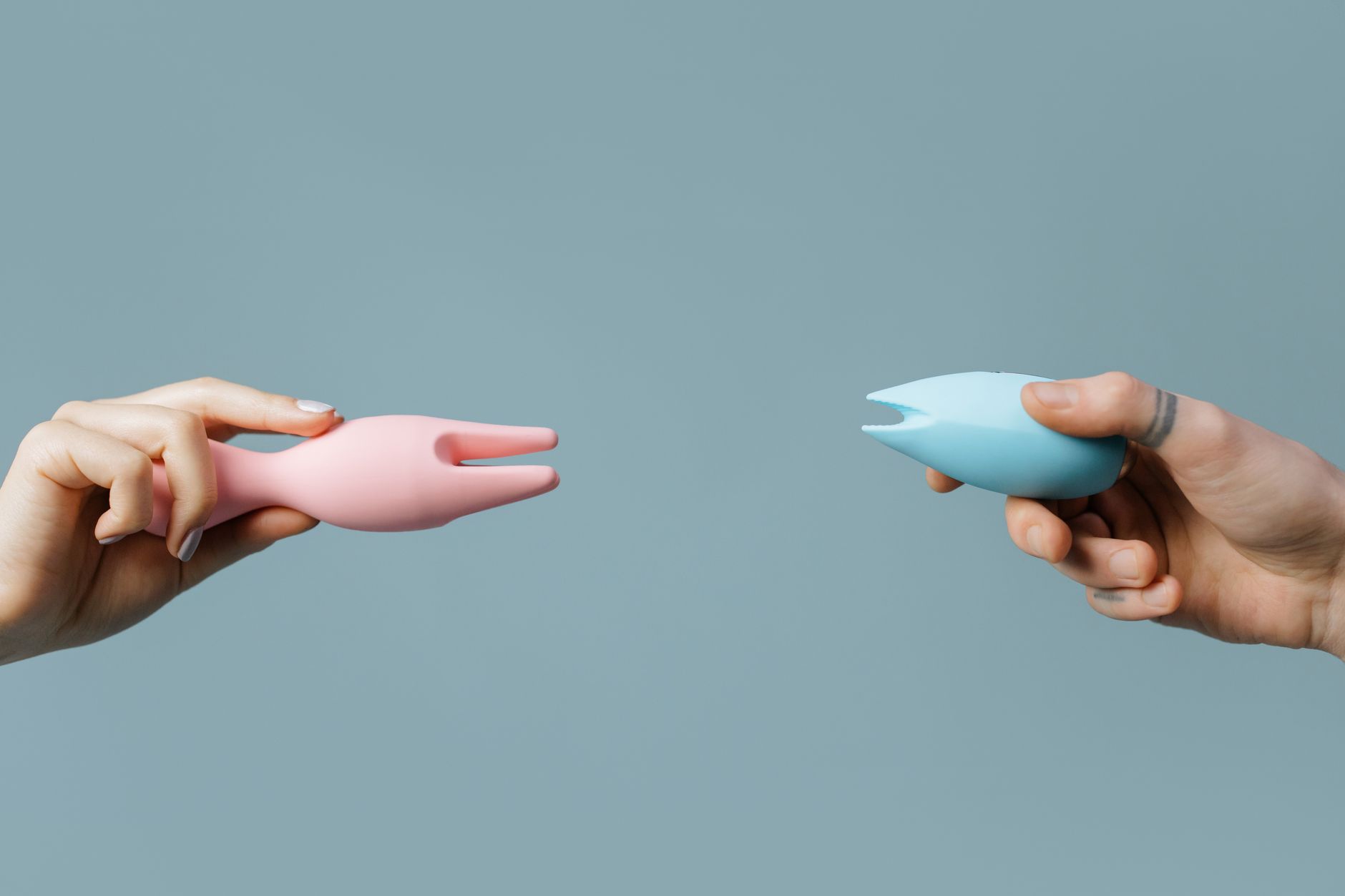
How to Introduce Lemon Vibrators to a Long-Term Partner Without Making It Awkward
You've been together for years. Suddenly bringing up toys feels like you're saying something's wrong. Here's how to reframe it so it lands as invitation, not indictment.
After five years, fifteen years, or twenty years together, bringing up vibrators feels like opening a door you can't close. You're worried your partner will think you're bored. Or that you're saying they're not enough. Or worse, that you've been secretly unsatisfied the whole time and only now felt safe enough to mention it.
Here's what's actually true: introducing toys to a long-term partner has nothing to do with what you've been missing and everything to do with what you're both ready to explore now.
The reason this conversation feels so charged is that you're catching your partner off-guard. They've built a whole narrative about how sex works in your relationship. Toys appear to contradict that narrative. Your brain reads it as criticism, even when you don't mean it that way.
The reframe: toys aren't a referendum on what you've done. They're an invitation to what you could do together. There's a difference between "I need something different" and "I want to try something new with you." The second sentence is true and lands differently.
Don't introduce the idea of toys while you're in bed. That's like bringing up your childhood trauma during sex. Wrong container, wrong time, wrong person.
Instead, pick a moment when you're both relaxed and clothed. Maybe you're making dinner. Maybe you're on a drive. Something low-stakes and private.
Start with context, not the ask. "I've been thinking about our sex life lately. Not because anything's wrong. I've just been curious about exploring something new, and I'd like your thoughts on it."
You're not saying: "Our sex is boring" or "I'm not satisfied." You're saying: "I'm interested in experimentation." That's a vulnerable thing to admit and it deserves space.
"I've been reading about different kinds of vibrators and I'm curious to try one together. I think it could be fun for both of us. I'm not saying anything's missing. I'm just interested in expanding what we do. Would you be open to talking about it?"
Notice what this sentence does: it makes you the curious party (not your partner). It says together (not alone). It acknowledges it's about exploration, not repair.
What to avoid:
Don't apologize. "I'm sorry to bring this up" or "I hope you're not offended" signals that you think there's something wrong with your request. There isn't.
Don't make it about clinical benefits. "Studies show vibrators improve orgasm quality" is technically true but it sounds like a sales pitch, not an invitation.
Don't use the word "toy." Seriously. It sounds cute and harmless but it also sounds childish, and your partner might lock up. "Vibrator" is straightforward. "A lemon vibrator" is specific and less intimidating than generic sex toy language.
Some partners say no immediately. "That's not for us" or "I'm not into that." That's worth taking seriously, but it's also worth understanding.
Ask why. Is it shame? Is it insecurity about their own capacity to satisfy you? Is it genuine discomfort with the object itself?
Shame is often fixable with conversation over time. Insecurity requires reassurance and patience. Genuine discomfort is different. If your partner is simply not interested, pushing usually backfires.
But here's what matters: a single "no" doesn't have to be permanent. People's comfort with toys often shifts once they understand what they're actually for. A partner who says no today might be curious in six months.
If they're willing to try, don't make the first experience a high-stakes event. Pressure kills pleasure.
Choose something that works for both of you. Lemon vibrators are designed to be responsive without being intimidating. They're quiet, ergonomic, and genuinely good at what they do.
Start with conversation about how you'll use it. Will they hold it? Will you? Will you use it together, or is this more about you exploring with them present? There's no right answer, but clarity helps everyone relax.
Let them see it first. Let them hold it. Let them ask questions. Demystifying the object half the battle. It's not a threat. It's silicone and engineering.
Long-term relationships that successfully integrate toys do one thing consistently: they talk about pleasure as something you're both building, not something that's been set in stone.
They check in after. "How did that feel?" "What did you notice?" "Want to try anything different next time?" These conversations are less sexy than the act itself but they're what makes it work.
They also normalize trying things once and deciding it's not for you. Not every toy clicks. Not every dynamic works. That's information, not failure.
I work with couples who've been together for decades. The ones who successfully introduce new elements to their sex life aren't the most adventurous or the least inhibited. They're the ones who've learned to talk about desire without shame.
Introducing a vibrator, whether it's a lemon clitoral vibrator or something else, is really just practice at saying "I want this" and "Let's explore this together." Those skills transfer everywhere.
A long-term partnership is a living thing. It changes because you change. Bringing that conversation to the surface, even if it feels awkward at first, is what keeps it alive.
This is the fear underneath most resistance. Address it directly. "I want you more, not less. This is something I want to explore with you." Then show up and mean it. Use the vibrator together. Have your partner involved. Make it collaborative, not a replacement.
After. Showing up with a vibrator already in hand feels like a decision you've made unilaterally. Having the conversation first, then shopping together (or at least picking together), makes it a joint choice. That matters psychologically.
Stop. Check in. "You okay?" is sometimes all it takes. Discomfort often melts with a pause and reassurance. But sometimes it means they're not actually ready, and that's information too. You can try again later. Pressure makes everything worse.
Depends on how much resistance you felt. If they were genuinely open, a few days is fine. If there was hesitation, give it a week or two. Let the idea settle. People often come around to curiosity once they've had time to sit with it.
Honestly? Own the awkwardness. "This is kind of vulnerable to bring up and I'm a little nervous about it" is disarming. It shows you're taking your partner's feelings seriously. It also humanizes you. Awkwardness dissolves faster when you acknowledge it.
Fully valid. You can change your mind too. Tell them. "I got excited about the idea but now I'm in my head about it. Can we slow down?" Relationships are supposed to be safe enough for that.
Introducing lemon vibrators to a long-term partner isn't really about the vibrator. It's about practicing honest communication around desire in a relationship that's had years to build walls. It's about saying "I'm interested in more" without saying "What we have isn't enough."
That conversation, handled well, doesn't just improve your sex life. It improves your whole relationship. Because you've just proven to each other that vulnerability is survivable. That you can want something and ask for it. That desire doesn't have an expiration date.
Start the conversation. Stay patient with the awkwardness. Show up with honesty. The rest tends to follow.
If you're looking to strengthen emotional intimacy alongside physical connection, that's part of the bigger work of long-term partnerships. Reach out if you'd like support navigating this transition. Contact us anytime.